Immigration Law, Radio/Media
U.S. Immigration: What Canadians Need to Know Right Now
March 27, 2026 by Clay Williams, Kevin Cheung
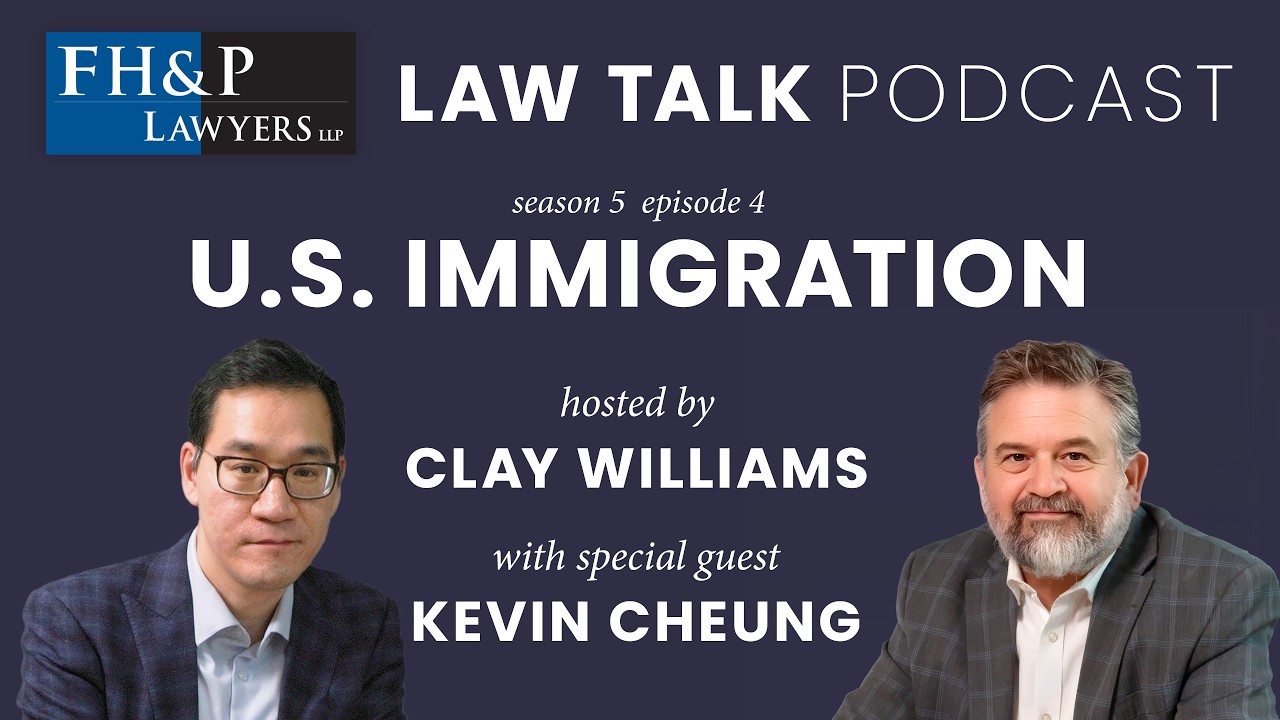
Travelling, working, or planning a move to the United States can be more complicated than many people expect. Even a short trip can raise legal issues if there are concerns about admissibility, prior immigration history, or a criminal record. Whether the goal is travel, work, or long-term planning, it helps to understand the legal issues before you leave Canada. In this episode of FH&P Lawyers’ Law Talk, Clay Williams speaks with Kevin Cheung about some of the most common questions people have about U.S. immigration right now.
What is U.S. immigration law?
At its core, it is about helping people get into the United States, or out of the United States, legally.
What does an immigration lawyer at FH&P help with?
Our U.S. Immigration lawyers help clients with matters relating to temporary work permits and visas, waivers for inadmissibility, and U.S. citizenship renunciation.
What does admissibility mean?
Admissibility refers to whether someone is legally allowed to enter the United States. Concerns can arise for different reasons, including health grounds, previous immigration violations, and criminal history.
Is this only about working in the U.S.?
No. These issues can affect both travel and work. A person may run into problems when trying to enter the U.S. for a vacation, for business, for a stopover, or for employment. USCIS (U.S. Citizenship and Immigration Services) also confirms there are multiple temporary worker classifications, each with its own requirements and process.
Can a vacation or stopover become a legal problem?
Yes. Even a brief stopover can become a problem because a person still has to go through a U.S. port of entry. A person might be detained there, so the right measures need to be taken.
Does a criminal record always matter?
Not every criminal matter leads to the same result, but any criminal record can raise a concern and should be reviewed before travel. It is worth determining whether an entry waiver is needed or not.
What is a U.S. entry waiver?
A U.S. entry waiver is a legal process used when a person may be inadmissible but wants permission to enter the United States temporarily.
Why does legal guidance matter before travel?
If there is any uncertainty about admissibility, it is important to deal with it before trying to cross the border.
The risk is not just inconvenience. Inspection happens at the port of entry, and delays, refusal, or other serious consequences may follow if the issue is not addressed in advance.
Can Canadians get help with working in the U.S.?
Yes. There are several possible pathways for temporary work in the United States, but the correct pathway depends on the person’s role, qualifications, and plans.
Is the process getting simpler?
No. In many cases, there may be more pathways, but the process is still complex. Choosing the wrong category or submitting the wrong application can lead to delays or denials. That is especially important for people who want to work in the U.S. or for businesses trying to move talent across the border.
Do employers need legal help, too?
Yes. Some matters involve individuals, and others involve employers. Businesses may need help bringing a Canadian worker into the U.S., expanding operations, or planning a move into the U.S. market.
Why would someone renounce U.S. citizenship?
Usually, that comes up where someone is a dual citizen, Canadian and U.S. It is a very personal and difficult decision, but for most people in that position, they are paying taxes in two countries. At a certain point in time, the reality of that tax hits pretty hard. That is why a lot of people renounce their citizenship.
Does living in Canada remove U.S. tax filing obligations?
Not necessarily. A U.S. citizen living in Canada may still have U.S. filing obligations. U.S. citizens and residents abroad generally must file income tax returns, and worldwide income is still relevant to that analysis.
What is FATCA, and why does it matter?
FATCA is the Foreign Account Tax Compliance Act. The IRS (Internal Revenue Service, U.S. government agency) says FATCA generally requires foreign financial institutions and certain other foreign entities to report information about financial assets held by U.S. account holders, and it may also require certain U.S. taxpayers to report specified foreign financial assets.
Do you still have to file U.S. taxes if you do not earn money in the U.S.?
Possibly, yes. The IRS says U.S. citizens and residents abroad generally must file tax returns, and the filing requirement is not limited to income earned inside the United States. Worldwide income is part of the analysis. Whether tax is ultimately payable depends on the full circumstances, but filing obligations can still exist.
What should people do if they are unsure about their status?
They should get legal guidance before travelling, applying, or making a major decision. That can include reviewing admissibility, assessing whether a waiver may be needed, identifying the right work pathway, or understanding how cross-border tax and citizenship issues may affect long-term planning.
U.S. immigration issues are not limited to permanent moves or complex business cases. They can affect vacations, stopovers, work opportunities, and cross-border tax planning. A criminal record, past immigration issue, or citizenship question can all have real consequences if they are not addressed early.
Getting advice before crossing the border or starting an application can help people understand their options and avoid preventable problems. If you need advice pertaining to the information mentioned above, reach out to our team for a consultation, and we can help you sort it out.
Disclaimer: This material is provided for informational purposes only and should not be construed as legal advice on any subject matter. Consult with a qualified lawyer for advice on specific legal issues.