Business Law, Radio/Media
Thinking of Selling Your Business? Start With These Legal Steps
July 03, 2026 by Clay Williams, Dustin Merritt
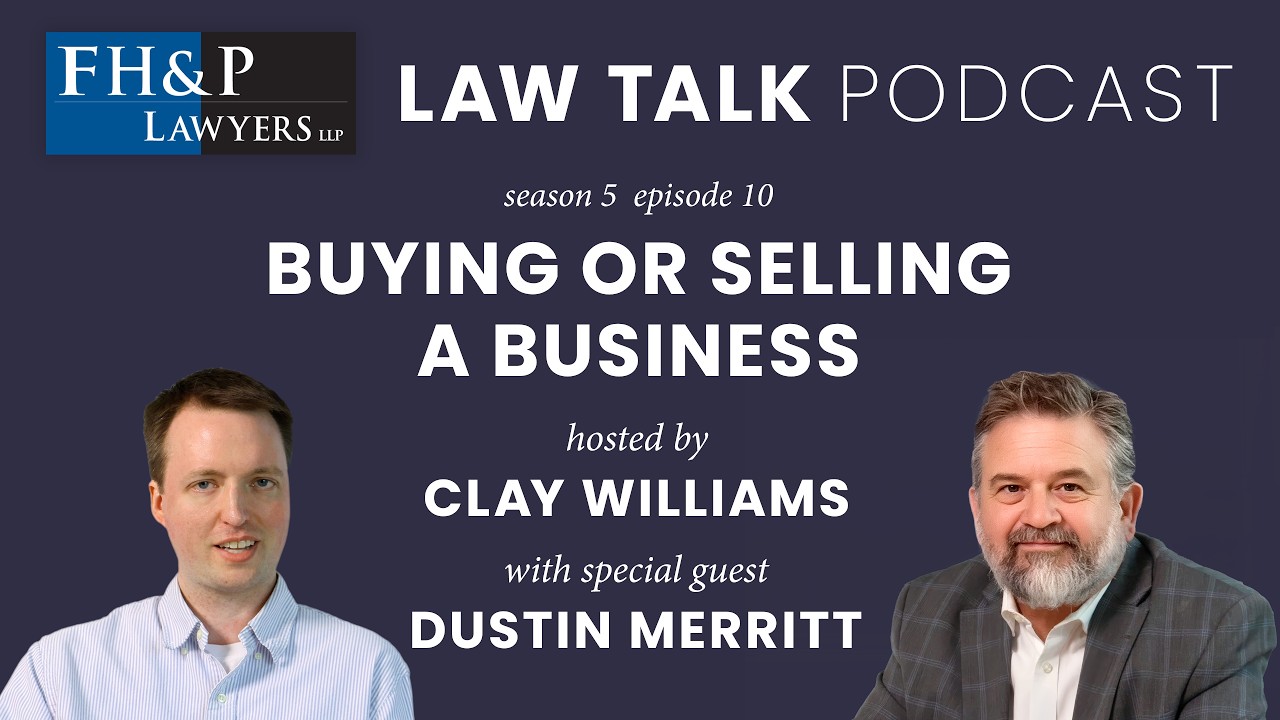
Selling a business is rarely a quick decision, and the legal groundwork often starts years before a deal closes. In this episode of FH&P Lawyers' Law Talk, Clay Williams speaks with Dustin Merritt about what business owners should do to prepare, when to bring in a lawyer, and what to expect from the letter of intent through to closing.
How Should You Prepare a Business for Sale?
Selling a business is a process that can take place over several years, not months. Part of that process involves getting your corporate records and contracts in order well ahead of time.
For a transaction to go smoothly, your corporate records need to be in good shape and your contracts with the people you do business with need to be up to date and enforceable. It also helps to have thought through succession planning and to have a strong group of employees in place who can keep the business running if you are no longer in the picture.
What Makes a Business More Attractive to a Buyer?
Putting in the work upfront to make a business more of a turnkey operation, rather than a collection of assets, tends to attract a higher purchase price. A buyer who can step in and run the business is generally willing to pay more than one who has to build everything from scratch.
Removing yourself from day-to-day operations is part of that, but it is not always easy. Many business owners have run their company for decades, are the face of the business, and hold all the key relationships. Getting the business to a point where it can transition smoothly takes real planning.
Do You Work With Other Professionals When Selling a Business?
Yes. We often work closely with accountants on tax planning, since how much of the purchase price you keep after taxes matters just as much as the sale price itself. Planning several years ahead can open up options like the lifetime capital gains exemption on a share sale, but that takes time to set up properly.
We also frequently work alongside business brokers, who are often engaged to help find a buyer and manage parts of the transaction. On many deals, the broker is an important professional at the table alongside the lawyer and accountant.
Do You Need a Business Valuation Before Selling?
Not always. Plenty of transactions proceed without a formal valuation. In the end, a business is worth what the market is willing to pay for it, and what a bank is willing to lend against it.
You can have a valuation done that says your business is worth a certain amount, but if buyers are not willing to pay that price or a bank will not lend that much against it, the valuation does not carry you very far on its own.
When Should You Involve a Lawyer?
Ideally, early. Your existing corporate lawyer should already be helping make sure your corporate records are up to date and that everything the company has done has been properly authorized and documented. That work is usually straightforward, but we regularly see corporate record books that are not in good shape when a deal is underway, and that can derail or delay a transaction.
We also want to be involved at the letter of intent stage, before it is signed. Clients sometimes come to us after already signing a letter of intent, and by that point, they have often agreed to terms we would not have recommended.
What Is a Letter of Intent, and Why Do You Need One if It Isn't Binding?
Once a buyer and vendor have worked through informal negotiations on price, assets, and basic terms, they typically put that framework into a short letter of intent, often four or five pages long, as a non-binding commitment to work toward.
The letter is non-binding, but that does not mean it is unimportant. Once someone agrees to a term in a letter of intent without legal advice, it is difficult to walk that term back later. If they still want to move forward with that buyer, the other side will usually hold them to it. That is why a quick legal review of a letter of intent before signing is worth the time.
A letter of intent also protects against legal costs. Before spending money on a full purchase agreement, both sides want to confirm there is a genuine meeting of the minds on the basic terms.
What Should You Watch for in an Exclusivity Period?
Exclusivity periods, where the seller agrees to take the business off the market for a set time, are a common feature of a letter of intent. Buyers want assurance that the seller is not shopping the deal around while they spend money on due diligence or drafting agreements.
That said, some clients come in with exclusivity periods that are far too long, effectively taking their company off the market for an extended stretch. A typical exclusivity period runs 60 to 90 days. Anything much longer than that in the current market is worth a second look.
What Happens Once You Have a Letter of Intent?
Ideally, a lawyer is already involved before the letter of intent is signed. From there, the next step is meeting with the client to discuss the deal concept and work through the letter of intent to see how it compares with typical market terms, and whether any changes would better protect the client's interests.
One of the more important decisions at this stage, if acting for a vendor, is whether the transaction will be structured as a share sale or an asset sale.
Should You Sell Shares or Sell Assets?
The distinction matters, particularly on tax. A share sale can often be structured in a more tax-efficient way for a vendor, though that depends on getting accountants involved early. A buyer, on the other hand, often prefers to buy assets, since that generally means taking on less liability and less risk.
Getting this decision right is a fundamental building block of the transaction, since it determines exactly what is being bought or sold.
When Does Due Diligence Happen, and How Does Financing Fit In?
Due diligence generally happens early in the process, once there is some commitment from both parties that the deal is actually going ahead. Before spending money on due diligence, it also helps to have a sense of how the transaction will be financed.
Banks can be hesitant to lend heavily against goodwill. They are usually more comfortable lending against hard assets like equipment or land than against the expectation that a business will keep succeeding. Buyers should expect to have some of their own capital in the deal, since banks want to see the buyer sharing in the risk. Banks also tend to look for buyers with industry experience, and their willingness (or reluctance) to lend can be a useful gut check on whether a transaction is priced appropriately.
What Are Representations and Warranties?
Representations and warranties are essentially guarantees a vendor makes about the state of the business, for example, that the financial statements are true and accurate, that a list of the business's contracts is complete, or that a list of employees and their pay is accurate.
A lot of time goes into customizing these terms in the purchase agreement to fit the specific transaction and to give the buyer real certainty about the state of the business they are acquiring.
What Is a Holdback, and When Is It Used?
A holdback typically comes up when acting for a purchaser, especially where there is a concern about potential liability in the company or a possible post-closing adjustment, such as for working capital.
In practice, the buyer pays most of the purchase price on closing but holds back a portion, often 5 to 10 percent, usually in a lawyer's trust account. Those funds are available if a liability or negative adjustment turns up after closing, giving the buyer a way to be made whole without having to sue the vendor.
Does Vendor Financing Come Up in These Deals?
Yes, alongside bank financing, it is common to see vendors provide some financing themselves. Rather than being paid the full price on closing, the vendor receives ongoing payments afterward. This structure is one of the more common ways private market deals come together.
Why Do Non-Competition Agreements Matter?
When you buy a business, you want assurance that the vendor is not going to open a competing business across town. People sometimes assume non-competition agreements are not enforceable and wonder why they matter, but in the context of a business sale, they typically are enforceable.
What Happens to Employees During a Sale?
Employment relationships carry real potential liability. Long-term employees often do not have formal employment agreements, and if things do not work out and you need to terminate someone after closing, you can face substantial severance obligations. That needs to be navigated carefully.
At the same time, most buyers rely heavily on experienced staff to keep the business running and are glad to have them stay on. Retention bonuses are sometimes negotiated for exactly that reason, to keep key employees in place through the transition.
Who Makes the Best Buyer for a Business?
Employees are often a strong option. They already know the business, can step in quickly, and transactions with employees tend to have a high success rate because there is little learning curve. Selling to an employee can also allow a vendor to exit with a shorter transition period, whereas selling to an outside third party often means staying involved for six months to a year to help with the handover.
Competitors are another common buyer type, and those deals often go well because the competitor already understands the industry and sees clear strategic value, whether that is expanding geographic reach or growing into new types of customers.
The type of buyer to be more cautious with is someone entirely new to the industry who simply wants to own a business in a space they know nothing about. If that buyer is paying in cash, it may be worth considering, but if any part of the payment is delayed or deferred, more caution is warranted.
The Bottom Line
Buying or selling a business touches on tax, financing, contracts, and people, and getting the structure right from the start makes a real difference to how smoothly the deal goes. This conversation was meant to give a broad view of a complex topic, and the right approach for any specific deal depends on the facts.
If you are preparing to buy or sell a business, FH&P Lawyers can help you plan the transaction, review a letter of intent, or work through a purchase agreement. Reach out to us for a consultation.
Disclaimer: This material is provided for informational purposes only and should not be construed as legal advice on any subject matter. Consult with a qualified lawyer for advice on specific legal issues.